The Global Healthcare Challenge
Access to quality healthcare remains one of the most persistent challenges facing humanity today. Across the world, millions of people still struggle to obtain basic medical services such as routine checkups, maternal care, vaccinations, and treatment for preventable diseases. According to global health studies, disparities in healthcare access are most visible in low-income and rural communities, where poverty, distance, lack of infrastructure, and shortage of trained personnel combine to create life-threatening gaps.
While medical technology has advanced rapidly in developed nations, many communities continue to suffer from conditions that could easily be prevented or treated with early intervention. Diseases such as malaria, typhoid, respiratory infections, and water-borne illnesses still claim lives simply because healthcare services are either unavailable or unaffordable. The global healthcare challenge is therefore not just about medicine—it is about equity, dignity, and the fundamental right to live a healthy life.
Healthcare Inequality in Developing Countries
In many developing countries, healthcare systems are under intense pressure. Public hospitals are often overcrowded, underfunded, and understaffed. Rural areas are particularly affected, with residents sometimes traveling long distances just to reach the nearest clinic. In such settings, delays in treatment often turn minor health issues into major emergencies.
Maternal and child health is one of the most affected areas. Women frequently give birth without skilled medical assistance, increasing the risk of complications for both mother and child. Children, especially those under five, are vulnerable to malnutrition and preventable diseases due to limited access to healthcare education, clean water, and sanitation.
Beyond physical infrastructure, healthcare awareness is also a major challenge. Many communities lack access to accurate health information, leading to late hospital visits, reliance on unsafe alternatives, or misunderstanding of basic preventive measures.
The Healthcare Situation in Cameroon
Cameroon reflects many of these global healthcare challenges. While urban centers have relatively better medical facilities, rural and semi-urban communities continue to face serious barriers to healthcare access. Shortages of medical equipment, trained healthcare professionals, and affordable services remain common.
In many parts of Cameroon, preventable diseases such as malaria, diarrhea, and respiratory infections remain leading causes of illness and death. Pregnant women and children are among the most vulnerable groups, particularly in communities where antenatal care is limited or nonexistent. Economic hardship further worsens the situation, as many families are forced to choose between healthcare and other basic needs such as food and education.
Healthcare challenges in Cameroon are not solely medical; they are closely tied to poverty, education, and infrastructure. Without a holistic approach, healthcare inequality continues to persist, affecting generations.
How These Challenges Can Be Tackled
Addressing healthcare inequality requires a multi-layered approach. First, community-based healthcare initiatives must be strengthened. Bringing healthcare closer to people—through local clinics, outreach programs, and mobile health services—can significantly reduce preventable illnesses.
Secondly, health education plays a crucial role. When communities understand disease prevention, hygiene, nutrition, and the importance of early medical intervention, overall health outcomes improve dramatically. Preventive care is often more affordable and sustainable than emergency treatment.
Partnerships between governments, NGOs, and local communities are also essential. Sustainable healthcare solutions cannot be imposed from outside; they must be built with community involvement, trust, and cultural understanding.
Our Contribution to Improving Healthcare Access
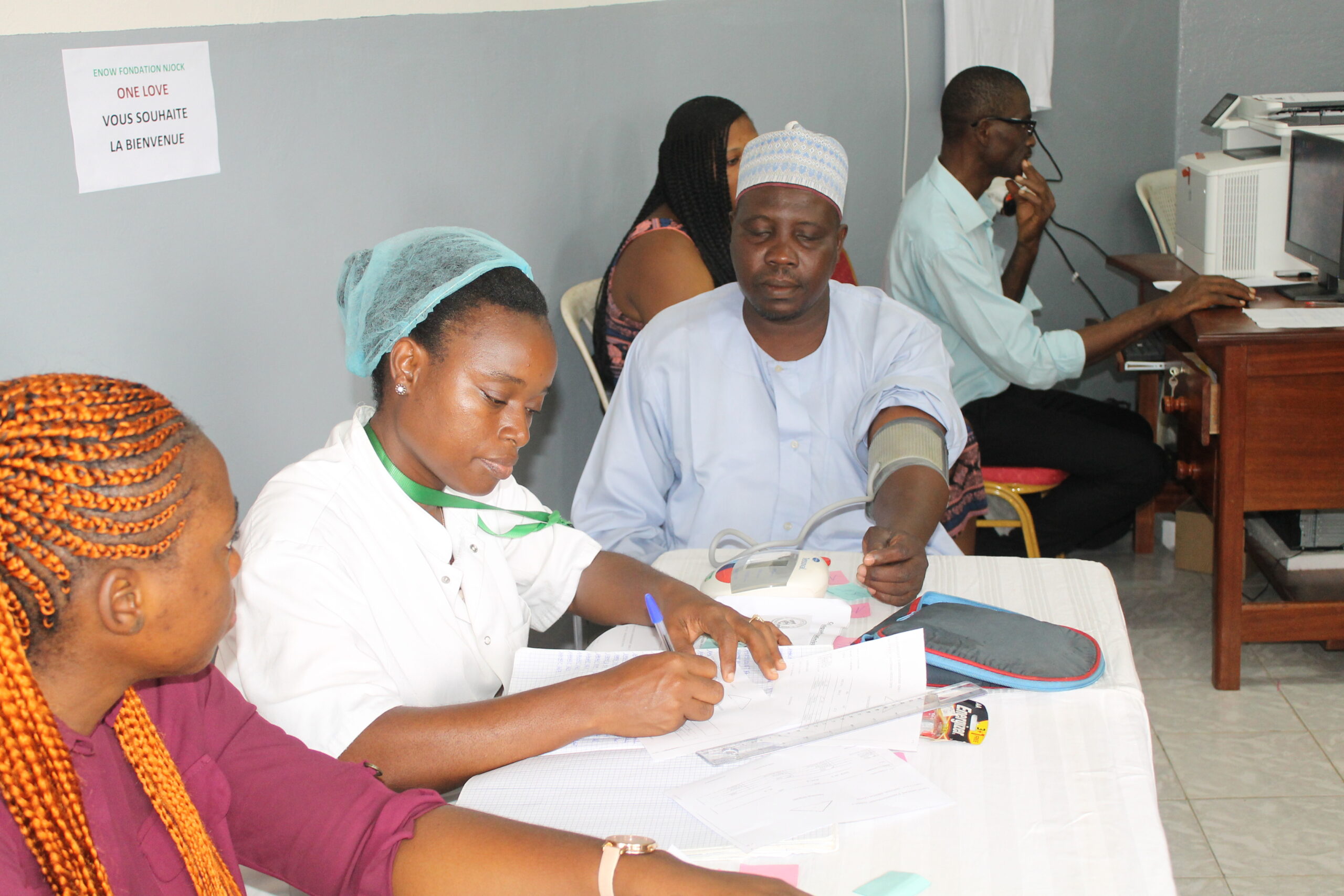
At Enownjock Foundation, healthcare is approached as a human right rather than a privilege. The foundation works to bridge the healthcare gap by supporting vulnerable communities through health education, basic medical support, and community-focused interventions.
By prioritizing preventive healthcare, maternal and child health awareness, and access to basic medical services, the foundation contributes to reducing avoidable suffering. Through collaboration with local stakeholders, Enownjock Foundation helps strengthen healthcare resilience at the grassroots level.
While challenges remain, the foundation’s commitment demonstrates that meaningful change is possible when healthcare solutions are people-centered, inclusive, and sustainable. Every life reached, every family supported, and every health intervention delivered is a step toward a healthier and more equitable future for Cameroon and beyond.